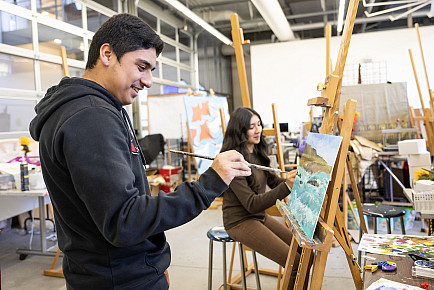
I did not walk into my first class thinking about belonging. I was mostly worried about whether I would stick out in ways I could not hide. I was older than most of the students. My hands moved slower. I asked questions that felt obvious once they were spoken out loud. I had been away from classrooms for a long time, and it showed in small ways, like how I hesitated before sitting down or waited to see what others did before opening my sketchbook.
I expected the room to feel competitive. That was the story I had told myself before enrolling. I imagined quiet comparisons, people guarding ideas, and a sense that I had already missed my chance by starting late. Instead, what I noticed first was uncertainty. It was everywhere. People doubted their work openly. They asked if something was working. They erased and redrew without apology. No one looked fully confident, even the students who seemed more skilled than me.
That surprised me more than anything. I had assumed confidence came with youth or talent or time spent doing the work. What I saw instead were people at different stages of figuring things out, often unsure but still showing up. Being in that environment made it easier to admit that I did not know what I was doing yet. I did not have to pretend. I could sit there, work slowly, and let the process be visible.
Showing unfinished work was the hardest part at first. I wanted to explain every line before anyone commented. I wanted to point out what I planned to fix. Over time, I stopped doing that. Not because I became braver, but because I realized no one was waiting to judge me. Feedback felt more like conversation than evaluation. People asked why I made certain choices. Sometimes they shared what they struggled with in their own pieces. It felt mutual, not one sided.
Somewhere along the way, I started to understand what an art community actually offers. It was not motivation in the loud sense. It was permission. Permission to learn in public. Permission to be incomplete. Permission to grow without needing to prove that growth constantly. Being around others who were also figuring things out made the process feel less isolating than working alone ever did.
I stopped measuring myself against the people sitting next to me. That took time. Old habits do not disappear quickly. But the focus shifted. I paid more attention to whether I understood something better than last week. Whether a drawing held together longer before falling apart. Whether I felt a little less tense sharing my work. Those changes mattered more than comparison.
Being part of an art community did not make the work easier, but it made it steadier. The collective effort mattered more than individual recognition. Showing up became less about being seen and more about being present. That difference changed everything for me.
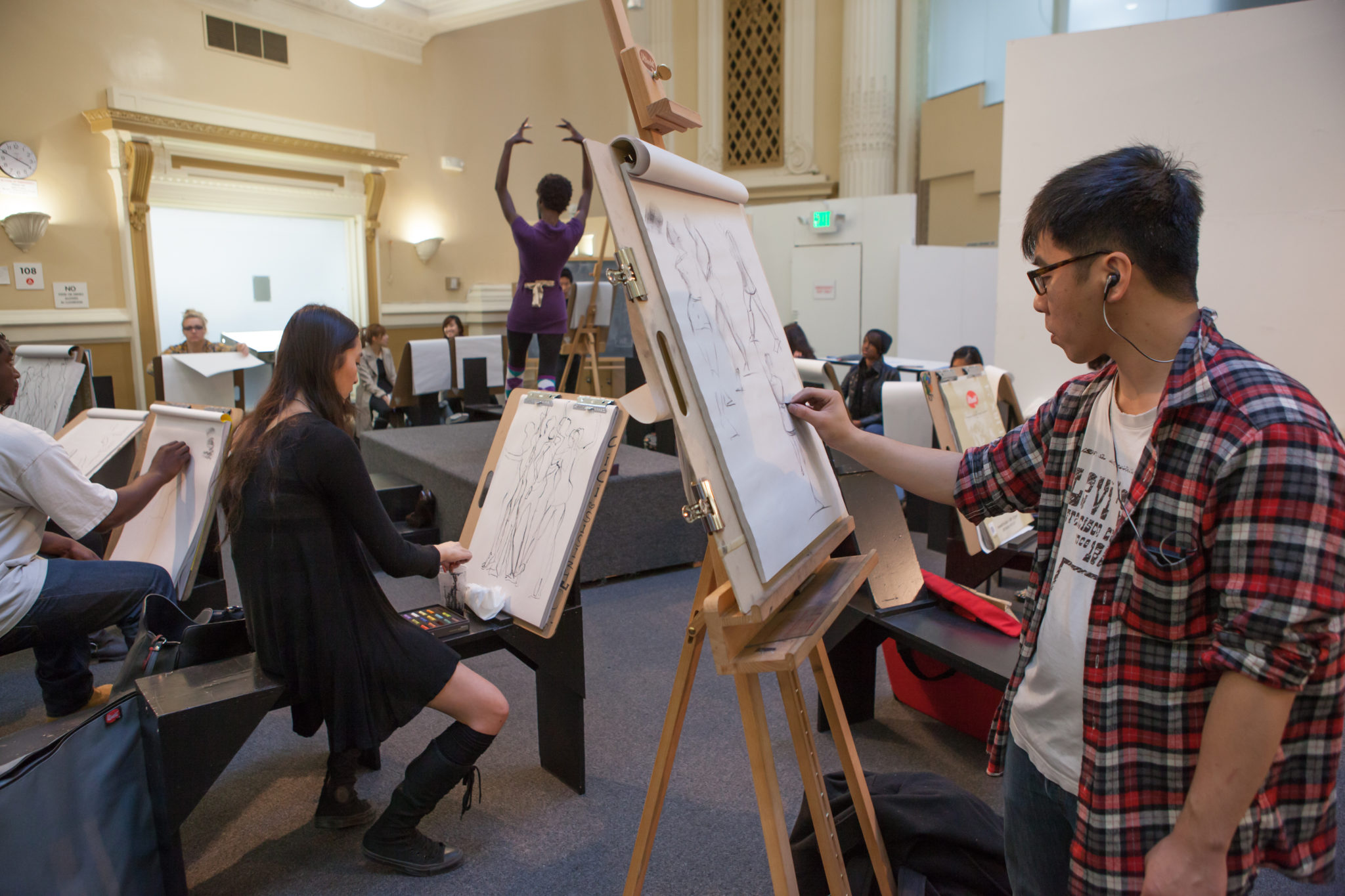
I started paying attention to how the room sounded when everyone worked at the same time. There was the soft scrape of charcoal, the tap of pencils being set down, the shuffle of paper as people shifted their weight. It was not silent, but it was calm in a way that felt intentional. No one rushed. No one tried to fill the space with noise. That atmosphere made it easier for me to settle into my own pace instead of worrying about keeping up.
Before returning to school, most of my art time happened alone. Late evenings at a kitchen table. Sketches tucked away before anyone could see them. If something did not work, it felt final, like proof that I was not cut out for this after all. Working alongside others changed that. Mistakes felt temporary instead of personal. You could see someone struggle with a piece for weeks, then suddenly something would click. Watching that happen made patience feel reasonable instead of naive.
I noticed how people talked about their work. They did not say things like this is good or this is bad very often. Instead, they talked about what felt off or what they were unsure about. Someone would mention that a hand looked stiff or a shadow felt heavy. Others would nod, not because they agreed, but because they recognized the feeling. That shared language made feedback less sharp. It was not about right or wrong. It was about noticing.
That shift mattered to me more than I expected. I had always been afraid of critique, even when I asked for it. I thought feedback meant judgment. What I experienced instead was attention. Someone took time to look closely at what I made and respond honestly. That kind of care does not come from competition. It comes from shared effort and a sense that everyone is invested in the process, not just the outcome.
There were days I felt invisible in the room. I did not speak much. I worked quietly. At first, that made me worry I was missing something important. Over time, I realized presence did not require performance. Being part of an community did not mean constantly participating out loud. It meant showing up consistently. It meant listening. It meant letting your work sit next to other work without needing to defend it.
I learned small habits by watching others. How someone warmed up before starting a piece. How another person took breaks instead of pushing through frustration. These were not lessons taught directly. They were absorbed through proximity. That kind of learning only happens when people share space over time. It is slow and subtle, but it sticks.
There was also relief in seeing unfinished work everywhere. Half drawn figures. Paintings that stopped mid decision. Pages crossed out and started again. I stopped feeling like I needed to hide the messy parts of my process. Everyone had them. Seeing that made it easier to keep going when things felt unclear.
At some point, I stopped asking myself if I belonged. The question faded without a clear answer. It was replaced by routine. Class days felt normal. The room felt familiar. I recognized the sound of certain footsteps and the way people set their bags down. Belonging did not arrive as a moment. It arrived as comfort.
That comfort did not make me complacent. If anything, it made me more willing to take risks. Trying something new felt safer when failure did not carry so much weight. The presence of others softened the edges of doubt. I could experiment without feeling exposed. That was new for me.
I realized that the value of an art community is not always obvious while you are inside it. It shows up later, when you notice how differently you respond to challenges. When you keep working even when results come slowly. When you trust that uncertainty is part of the process and not a sign to stop.
I started noticing changes outside the classroom before I fully noticed them in my work. I carried myself differently when I talked about what I was doing. I stopped adding disclaimers. I did not rush to explain why something might not be good yet. That habit had been automatic before. Being around others who showed unfinished work without apology made that kind of honesty feel normal instead of risky.
There were still moments of doubt, of course. Some days I would look around the room and feel like I was standing still while everyone else moved forward. Progress never feels evenly distributed when you are living inside it. But those thoughts did not stop me the way they once did. I learned to sit with them, to keep working even when confidence dipped. That endurance came from watching others do the same thing, not from any sudden belief in myself.
Group critiques used to make my stomach tighten. Sitting in a circle with work spread out felt exposing. What surprised me was how rarely the focus stayed on a single person for long. The conversation moved. Ideas bounced around. Someone would point out something interesting, another would ask a question, and the discussion would drift toward process instead of outcome. It felt less like being evaluated and more like being included.
I also noticed how often people admitted confusion. Someone would say they were stuck. Another would admit they had no idea how to fix a problem yet. That kind of honesty changed how I saw struggle. It was not a private failure. It was a shared stage of learning. Once I saw that, I stopped treating uncertainty as something to hide.
Outside of class, conversations continued in small ways. A comment in the hallway. A quick exchange about materials. A shared complaint about running out of time. None of it was dramatic, but it mattered. Those brief moments reinforced that we were all carrying similar questions, even if our work looked very different.
I began to understand that growth does not always announce itself. There was no clear moment when I felt transformed. Instead, there was a steady accumulation of small shifts. I trusted my decisions a little more. I spent less time second guessing every mark. I accepted that not every piece needed to succeed to be worthwhile.
Being part of an art community helped me separate effort from outcome. I could put care into the work without tying my sense of worth to how it was received. That distinction mattered more than technical improvement. It made the process sustainable. I could imagine continuing, even through slower periods.
I also learned how important it is to witness other people growing. Seeing someone struggle and then improve reshaped my expectations for myself. Progress rarely moves in straight lines. It loops and stalls and jumps unexpectedly. Watching that happen in others made it easier to accept when my own path felt uneven.
There were days when nothing worked. Charcoal smudged where it should not. Proportions slipped. Ideas fell apart halfway through. In the past, those days would have convinced me to stop. Now they felt temporary. I packed up, went home, and returned the next class ready to try again. That persistence was new.
I think that is when I understood the deeper value of shared creative space. It does not remove difficulty. It changes how you carry it. You stop assuming struggle means you are alone. You stop treating slow progress as failure. You learn to keep going, not because you are certain, but because you are supported.
As the semester went on, I noticed how much of my learning came from simply being present. Not every lesson was tied to an assignment or a critique. Sometimes it was watching someone erase half their drawing and start again without frustration. Sometimes it was overhearing a conversation about materials that made me rethink a habit I had never questioned. These moments did not feel instructional, but they shaped how I worked.
I had always thought learning art was mostly about technique. That was part of it, of course, but technique felt secondary once I settled in. What mattered more was learning how to stay with a piece when it stopped being comfortable. How to pause instead of panic. How to recognize when pushing harder would not help and stepping back might. Those skills were modeled quietly by the people around me.
There were students who talked easily and often. Others, like me, stayed mostly quiet. Both seemed to belong in their own ways. That realization mattered. I did not need to become louder or more confident in a visible way to be part of what was happening. My commitment showed up through consistency. I came to class. I worked. I listened. That was enough.
Outside of school, I noticed how differently I approached creative work. I was less protective of ideas. I shared sketches with friends without rehearsing explanations. I accepted suggestions without immediately defending my choices. That shift surprised me. It felt like trust, but not just in others. It was trust in the process itself.
I also became more aware of how comparison used to drain my energy. Measuring myself against others left little room for curiosity. Once that habit loosened, I found myself paying attention to details again. Light. Texture. The feeling of a line that finally made sense. Those small moments of satisfaction had been drowned out by anxiety before.
Being surrounded by people who were committed, even quietly, changed how I understood motivation. It was not about being inspired all the time. It was about showing up when inspiration was absent. Seeing others do that normalized effort. It made discipline feel less lonely.
There were setbacks. Life interfered. Deadlines slipped. Energy dropped. But the shared environment held those moments too. Missing a class did not mean falling behind permanently. Returning did not require explanation. That flexibility made persistence possible in a way I had not experienced before.
I began to see how an art community creates space for people at different stages to coexist. Beginners and advanced students worked side by side. No one waited to be finished before participating. That mix removed the illusion that mastery is a fixed state. Everyone was still learning something.
That realization eased a pressure I had carried for years. I did not need to arrive fully formed. I could be in progress without apology. The room allowed for that. The people in it allowed for that. Over time, I allowed it for myself.
The longer I stayed, the more obvious it became that growth was happening whether I tracked it closely or not. Confidence did not arrive as certainty. It arrived as willingness. Willingness to try again. Willingness to stay. Willingness to let the work be seen before it was ready.
I started thinking about how different this experience felt from my earlier attempts to learn on my own. Back then, progress felt fragile. If I missed a few days or lost momentum, it was hard to restart. There was no shared rhythm to return to. Now, the routine existed outside of me. Classes continued whether I felt ready or not. That structure carried me through periods when motivation dipped.
I also noticed how much responsibility shifted once I stopped working in isolation. My effort mattered, not just to me, but to the shared space. Showing up late or unprepared felt different when others were counting on a full group discussion. That sense of accountability was quiet, never enforced, but real. It made commitment feel mutual rather than personal.
Over time, I paid more attention to how people supported one another without turning it into something performative. Encouragement came in small forms. A nod during critique. A brief comment about something working well. A suggestion offered without insisting it be followed. Those gestures accumulated. They created an atmosphere where trying felt safer than holding back.
I realized that much of what I was learning had little to do with producing finished pieces. It was about learning how to remain engaged when results lagged behind effort. That skill transferred into other areas of my life. I became more patient with myself. I stopped abandoning projects at the first sign of discomfort. The habit of staying began to replace the habit of quitting.
There were moments when I questioned whether this environment would still matter once classes ended. I wondered if the sense of connection would disappear without shared deadlines and physical space. What surprised me was how much of it stayed internal. The way I approached work had changed. The voice that used to tell me I was behind grew quieter.
I carried the presence of others with me even when I worked alone. I could imagine how someone might respond to a piece, not in a critical way, but in a curious one. That imagined conversation kept me engaged. It reminded me that art does not exist only at the moment of completion. It exists throughout the process.
I also began to notice how differently I talked about my work with people outside of school. I no longer framed it as a hobby I might fail at. I spoke about it as something I was actively learning. That distinction mattered. It made space for imperfection without diminishing commitment.
Looking back, I see that returning to classes later in life was not just about acquiring skills. It was about relearning how to participate. How to be part of something without needing to stand out. How to contribute quietly and still feel connected. Those lessons felt as valuable as anything technical.
I think many adults hesitate to begin again because they imagine learning as a solitary act. The idea of doing something new in front of others feels risky. What I found instead was that shared vulnerability reduced that risk. Being surrounded by people who were also unsure made uncertainty feel manageable.
The longer I stayed, the more I understood that progress did not need to be dramatic to be meaningful. Small shifts accumulated. Habits changed. Confidence settled in gradually. The work kept moving forward, and so did I.
As time passed, I became more aware of how my expectations had shifted. Early on, I thought I needed clear signs of improvement to justify continuing. Better drawings. Stronger compositions. More confidence. What replaced that thinking was something quieter. I learned to value consistency over visible progress. The act of returning mattered more than any single result.
I noticed how often people around me showed up tired, distracted, or unsure, yet still worked. No one waited to feel ready. That was important. Readiness, I realized, was a moving target. If I waited for it, I would miss most opportunities to grow. Being part of a shared space made that lesson unavoidable. The room filled whether everyone felt prepared or not.
There were conversations that stayed with me long after they happened. Not dramatic ones, just small exchanges about doubt or frustration. Someone admitting they felt stuck for weeks. Someone else sharing that they had nearly quit before finding their footing. Hearing those stories reframed my own experience. Struggle stopped feeling like a personal flaw and started feeling like a common phase.
I also became more comfortable with ambiguity. Not knowing what a piece would become no longer felt like failure. It felt like possibility. That shift was subtle, but it changed how I approached the work. I stopped forcing early decisions. I let things develop more slowly. The presence of others working through similar uncertainty gave me permission to stay open longer.
Outside of school, I noticed this patience spilling into everyday life. I was less reactive. Less quick to abandon things that did not go smoothly. The discipline of staying with discomfort translated into a steadier mindset. It was not something I practiced deliberately. It happened as a byproduct of being surrounded by people who modeled persistence.
I think that is something people underestimate about shared creative environments. The lessons are not always spoken. They are absorbed through repetition. Through watching how others respond to setbacks. Through seeing effort continue even when results are unclear. Over time, those patterns become internal.
There were still moments when I felt like an outsider. Age does not disappear just because you commit to something. Neither does self doubt. But those moments passed more quickly. They no longer defined my experience. I had evidence now that I could belong without fitting a narrow mold.
I began to trust that growth would happen if I stayed engaged. That trust did not rely on constant reassurance. It came from seeing progress unfold around me in unpredictable ways. Some people advanced quickly, others slowly. No single pace was treated as correct. That flexibility made space for many paths.
What surprised me most was how little emphasis there was on competition. Achievement existed, but it was not the center. The focus stayed on learning, on showing up, on helping one another move forward. That environment made it easier to focus inward rather than constantly looking sideways.
By the time I realized how deeply this experience had reshaped my approach, it already felt normal. The habits had settled in. I worked more steadily. I judged myself less harshly. I kept going even when certainty was absent. Those changes did not announce themselves. They accumulated quietly.
By this point, the question of whether I belonged no longer felt urgent. It still surfaced occasionally, but it did not control my decisions. I showed up because I wanted to work, not because I needed reassurance. That shift felt significant. It meant my commitment was no longer conditional on confidence.
I began to see how easy it is to confuse visibility with value. Earlier, I thought participation meant speaking often, producing strong work quickly, or standing out in obvious ways. What I learned instead was that steady presence carries its own weight. People notice consistency. They trust it. Even quiet contributions shape a shared space over time.
I paid closer attention to how trust formed in the room. It was not built through praise or comparison. It came from seeing the same faces return week after week. From watching people stay with difficult pieces instead of abandoning them. From the way conversations picked up where they left off without needing to reestablish context.
That sense of continuity mattered to me more than I expected. As someone who started later, I worried about being temporary, about not having enough time to justify the effort. What I realized was that time is not only measured in years or milestones. It is measured in attention. In repetition. In the willingness to stay engaged even when progress is slow.
I also noticed how the environment shaped my expectations of myself. I stopped assuming that struggle meant I was behind. I stopped treating ease as the goal. The process became something I could inhabit rather than something I had to conquer. That change softened my approach without making it passive.
There were moments when I caught myself giving the same quiet encouragement to others that I had once relied on. A small comment during critique. A nod when someone admitted they were unsure. Those gestures felt natural now. They were not calculated. They were part of the rhythm of the space.
It struck me that learning later in life does not mean learning differently in terms of capacity, but it does change what you pay attention to. I was less interested in proving myself and more interested in understanding how things worked. That curiosity made the experience richer. It also made comparison feel less relevant.
I began to think about how many people carry creative interests quietly for years, waiting for the right moment to begin. Often that moment never arrives because it feels too exposed to start alone. What I experienced showed me that learning does not have to be solitary. Shared effort reduces risk. It distributes doubt.
The room did not erase uncertainty, but it made it tolerable. It turned it into something shared rather than something private and heavy. That difference changed how I viewed not just art, but learning itself. It made beginning again feel possible.
By now, staying felt natural. The work continued. Questions remained. But the fear that once surrounded them had loosened. I was no longer trying to find my place. I was already in it.
Near the end of the term, I found myself thinking less about classes and more about what would come next. Not in a big, dramatic way. Just small questions. Where would I work when the structure was gone. How would I keep the same steadiness without a shared room pulling me forward. Those thoughts did not scare me the way they might have earlier. I had learned that connection does not vanish just because a schedule changes.
What stayed with me most was not any single assignment or critique. It was the feeling of being part of something that valued effort over polish. That experience reshaped how I approached creative work outside of school. I sought out spaces that felt similar in spirit, places where people shared work honestly and responded with curiosity instead of judgment.
I remember stumbling across an online space that echoed much of what I had experienced in class. It was not loud or performative. People posted work in progress. Feedback felt conversational. There was room for learning without pressure. Finding a place like that mattered more than I expected. It reminded me that the sense of support I had grown used to did not have to disappear when classes ended.
That discovery helped me understand something important. An art community does not depend on location. It depends on shared intention. On people showing up willing to learn, willing to respond thoughtfully, willing to stay present even when outcomes are uncertain. Whether that happens in a classroom or online, the effect is similar. You stop feeling like you are doing this alone.
At one point, I shared a piece online that I would have hidden before returning to school. It was unfinished and uneven. I hesitated before posting it, then remembered how often that hesitation had passed once I let myself participate anyway. The responses were thoughtful. Some people pointed out strengths I had not noticed. Others asked questions that made me see the work differently. It felt familiar in the best way.
Experiences like that reinforced what I had learned over time. Growth does not require certainty. It requires engagement. Being surrounded by others who care about the process makes that engagement easier to sustain. It softens self doubt without eliminating it. It replaces isolation with shared effort.
I think about how different this journey would have felt if I had tried to do it entirely on my own. I might have learned some things, but I doubt I would have stayed. What made the difference was not motivation or talent. It was connection. Knowing that others were also figuring things out gave me permission to keep going.
That lesson continues to shape how I approach creative spaces now. I look for environments that encourage honesty over performance. That welcome unfinished work. That understand learning as something ongoing rather than something you complete. Places like this art community helped reinforce that mindset and made the transition away from formal classes feel less abrupt.
Returning to school later in life taught me many things, but the most lasting one was simple. You do not need to have everything figured out to belong. You just need to show up, stay curious, and allow yourself to be part of the process. When you find others willing to do the same, the work becomes lighter, and the path forward clearer.
I no longer worry as much about whether I started too late. The timeline matters less now. What matters is that I started, that I stayed, and that I learned how powerful shared effort can be. That understanding continues to guide me, long after the classroom lights have been turned off.